Transcriptomic Study of Diffuse Large B-Cell Lymphoma Associated with HIV Infection: Identification of Novel Molecular Subtypes
* Regis Costello;
Yasmine Labiad;
Céline Baier;
Michèle Genin;
Caroline Besson;
Sophie Prevot;
Hubert Lepidi;
-
* Regis Costello: Laboratoire TAGC/INSERM UMR1090, Marseille, France; Service d’Hématologie et Thérapie Cellulaire, AP-HM, Marseille, France
-
Yasmine Labiad: Laboratoire TAGC/INSERM UMR1090, Marseille, France
-
Céline Baier: Laboratoire TAGC/INSERM UMR1090, Marseille, France
-
Michèle Genin: Institut Pierre Louis d’Épidémiologie et de Santé Publique (IPLESP), UMRS1136 INSERM Et UPMC, Paris, France
-
Caroline Besson: Service d’Hématologie Oncologie, Centre Hospitalier de Versailles, Versailles, France; Centre de Recherche en Épidémiologie et Santé des Populations (CESP), INSERM U1018, Université Paris-Saclay, Villejuif, France; Service d’Anatomopathologie, AP-HP, Le Kremlin-Bicêtre, France
-
Sophie Prevot: Service d’Anatomopathologie, AP-HP, Le Kremlin-Bicêtre, France
-
Hubert Lepidi: Service d’Anatomopathologie, AP-HM, Marseille, France
Abstract
Background/Objectives: Transcriptomic profiling has enabled the classification of Diffuse Large B-Cell Lymphoma (DLBCL) into distinct subtypes, such as Germinal Center B-Cell-like (GCB) and Activated B-Cell-like (ABC), primarily in HIV-negative patients. However, HIV-associated DLBCL may follow different molecular mechanisms due to immune dysregulation. This study aimed to characterize the transcriptomic landscape of HIV-related DLBCL to identify distinct subtypes and deregulated pathways with potential theragnostic implications.
Methods: Twelve formalin-fixed, paraffin-embedded DLBCL samples from HIV-positive patients were analyzed using Agilent’s microarray. Quantile normalization and unsupervised hierarchical clustering were performed to classify tumors based on gene expression profiles.
Results: Two distinct transcriptomic subgroups were identified. TP53 and BCL7A were overexpressed in cluster I, while BCL2 was overexpressed in cluster II. Notably, the “immune system development” pathway was underexpressed in cluster I compared to cluster II.
Conclusions: Our findings reveal two molecularly distinct subtypes of HIV-associated DLBCL, likely driven by differences in tumor microenvironment and immune status. These transcriptomic profiles may guide future targeted therapies. Further validation in larger cohorts and integration with proteomic and clinical data are warranted to develop a comprehensive theragnostic framework.
Simple Summary
The study of transcriptomic profiles of Diffuse Large B-Cell Lymphoma (DLBCL) has enabled the classification of several subtypes, known as Germinal Center (GC) and Activated B-Cell-like (ABC). These analyses were performed in non-HIV-related lymphomas. HIV-associated lymphomas have a unique pathophysiology, influenced not only by classical oncogenic processes but also by immune suppression and a specific tumor microenvironment. In our study, we carried out a transcriptomic analysis of patients with DLBCL linked to HIV infection. This analysis clearly identified two distinct subgroups; however, these did not correspond to the established GC or ABC categories. Key genes involved in cancer biology were differentially expressed, such as TP53 (Tumor Protein p53), which was overexpressed in group I patients, and BCL2 (B-Cell Leukemia/Lymphoma 2), which was overexpressed in group II patients. These differences in gene expression are therapeutically significant and should be considered in future therapeutic trials. Tailored treatment strategies could be developed to address these specific molecular characteristics, ultimately improving patient outcomes.
Abbreviations
Diffuse Large B-cell Lymphoma (DLBCL);
Human Immunodeficiency Virus (HIV);
Nuclear Factor Kappa B (NF-κB);
Quantitative PCR (qPCR)
Introduction
Diffuse large B-cell lymphomas (DLBCL) represent 30%–40% of lymphomas and are treated with a combination of chemotherapy and immunotherapy drugs. The International Prognostic Index (IPI), used to classify and treat patients, is calculated on the basis of clinical parameters: age, LDH level, anatomical stage, extra-nodal localizations, and performance status [1]. On this basis, four prognostic groups are defined by a 5-year survival rate varying from 26% for IPI 4–5 to 70% for IPI 0–1. Modifications of the IPI have been proposed that have only marginal consequences on the prognosis in the era of anti-CD20 associated chemotherapy regimens. Nonetheless, in a seminal paper, Alizadeh et al. [2], used microarray analysis of tumor biopsies from patients with DLBCLs to propose the distinction of two different subtypes. The germinal center (GC) subtype is defined by the overexpression of CD10, CD38, A-myb, OGG1, BCL-6, BCL-7A, and LMO2, while the ABC (activated B cell) subtype is characterized by the overexpression of IRF4, FLIP, and BCL-2, with its proliferation seemingly relying on the Nuclear Factor Kappa B (NF-κB) pathway. The GC lymphomas are considered to have a better prognosis than the ABC type. Based on these molecular profiles, attempts have been made to specifically target the metabolic pathways used in each subtype [3]. Moreover, attempts to use a simpler technique for its use in routine practice have been proposed, such as the immunochemistry algorithm of Hans et al. [4] or Muris et al. [5], which shows a strict correlation with transcriptomic data, is not observed. Since ABC-DLBCL proliferation and survival rely on BCR-dependent NF-κB signaling, inhibitors of Bruton Tyrosine Kinase (BTK) could be useful, although more trials are required before the validation for routine treatment [6,7]. Additional subgroups have been further identified, since a 17-gene model allowed for dividing DLBCL into quartiles with five-year survival ranging from 15% to 73% [8]. These profiles correspond to different prognostic groups, at least in relapsed/refractory patients [9], although this issue is debated [10] and probably depends on the technical approach used, Transcriptomic Profiling versus vs. Algorithms [11].
Notably, these studies were performed in Human Immunodeficiency Virus (HIV)-negative patients, although non-Hodgkin lymphomas in HIV-infected patients include specific pathological forms (serous lymphomas, multicentric Castleman’s disease), in addition to histological forms found in non-immunocompromised patients, including Burkitt’s lymphoma and DLBCL [12,13]. Although this recent WHO classification is no longer exclusively based on the lymphoma disease background (HIV-related, post-transplantation, primary immunodeficiency, iatrogenic immuno deficiencies), HIV infection has some specificity [14]. The presence of HIV induces a particular microenvironment in the lymph node that induces, among other effects, activation and proliferation of B cells in the absence of the immune response. This proliferation increases the deregulation of genes such as p53 and the activation of proto-oncogenes such as c-myc and BCL-6, in addition to the absence of immune surveillance. Moreover, the immunosuppression linked to CD4 T-cell depletion allows the proliferation of EBV and of KSHV/HHV8 viruses, which encode proteins that stimulate B cell proliferation and thus lymphomagenesis [15]. Nonetheless, HIV itself could have a direct impact on lymphomagenesis, in particular via the expression of HIV p17 protein variants that accumulate in lymph nodes (even in the absence of HIV detection) and are able to activate the PI3K/AKT signaling pathway [16]. These HIV p17 protein variants share insertions in their C-terminal region that modify their biologic properties. Although recent advances in anti-retroviral treatment allow most patients with controlled HIV infection to be treated like the general population [17], due to these particularities of HIV-related lymphomas, the existence of the two GEP signatures GC vs. ABC in HIV-related lymphomas was not evident. Thapa et al. [18] have focused their study on the expression of microRNAs, since these molecules have been shown to play a significant role, more specifically, in EBV-related tumorigenesis [19]. In this study, they have shown that the mi-17-92 paralog clusters were upregulated in B cells, more particularly at the GC stage, in the eight analyzed DLBCL but also in three other subtypes of HIV-related lymphomas (Burkitt, central nervous system, primary effusion lymphoma) [18]. The study of Ramos et al. [20] analyzed the expression of NF-κB target genes in HIV-related lymphomas. They observed the expression of tissue origin-specific markers in PEL (CD69, CSF-1, CIQBP), of IL1beta, cyclin D3, and CD48 in KS, and identified CCR5 as a key marker in Burkitt lymphoma [20].To differentiate HIV-related from other DLBCL, Capello et al. and Rinaldi et al. performed a genome-wide DNA profiling [21,22]. They concluded that HIV-related had specific genetic lesions since fragile site-associated genes were more frequently inactivated, more particularly FHIT (FRA3B), WWOX (FRA16D), DCC(FRA18B), and PARK2(FRA6E), in comparison with non-HIV-related DLBCL. In the study of Chapman et al. [23], thirty HIV-related DLBCL were analyzed. Interestingly, the HIV-related lymphomas had more frequent MYC rearrangements or mutations than non-HIV-related lymphomas, and in contrast, had rarely BCL2 rearrangements. The authors used the Hans algorithm [4] to classify these HIV-related lymphomas and concluded that half of the sample used were of GC lymphoma type, but the other half could not be classified as ABC. These results were confirmed by the cell of origin (COO) LymphGen tool [24]. Of note, the percentage of lymphomas classified as other than GC but not ABC (50%) is quite high in comparison with the results usually obtained in non-HIV-related lymphomas, i.e., ~50% of ABC types [2].The very interesting study of Madan et al. [25] analyzed by immunohistochemical staining of tissue microarrays the expression of GC markers (BCL6, CD10, CyclinH) vs. ABC markers (MUM1, CD138, PAK1, CD44, BCL2) in 12 HIV-related and 27 non-HIV-related DLBCL. The immunostaining, as expected, clearly identified two distinct clusters of GC and ABC types in non-HIV-related DLBCL, while in the case of HIV-related lymphomas, only a single aggregate was identified, which moreover expressed an intermediate GG/ABC phenotype [25]. Interestingly, the study of Patrone et al. [26] allows some different conclusions in comparison with the previous studies. They analyzed by Suppression Subtractive Hybridization (SSH) to isolate differentially expressed genes from HIV-related and non-related DLBCL. They progressively restricted the study from 1800 to 18 candidate genes. Unfortunately, there was no preferential expression of these genes in HIV-related vs. non-HIV-related lymphomas. This study had nonetheless significant limitations, i.e., the number of analyzed samples and the restriction of analyzed genes to those already annotated in data banks [26].
HIV-associated DLBCL differs significantly from non-HIV-associated DLBCL in both clinical and molecular features. In HIV-positive patients, chronic immune activation and CD4 T-cell depletion create an immunosuppressive environment that promotes the proliferation of oncogenic viruses, such as Epstein-Barr Virus (EBV) and Kaposi’s Sarcoma-Associated Herpesvirus (KSHV/HHV8), which contribute to lymphomagenesis through the expression of viral proteins, including LMP1 and v-FLIP. Molecularly, HIV-associated DLBCL often exhibits higher rates of MYC rearrangements and reduced incidence of BCL2 alterations compared to non-HIV DLBCL, indicating alternative oncogenic pathways in its development. Furthermore, gene expression profiling studies reveal a higher prevalence of unclassifiable or intermediate phenotypes, blurring the distinction between the Germinal Center (GC) and Activated B-cell (ABC) subtypes that are typically observed in immunocompetent patients.
Finally, the validation of the GC/ABC subtypes in HIV-related lymphoma has to be confirmed. For these reasons, the objective of our study was to analyze the gene expression profile of DLBCL in order to verify the possible existence of subgroups described in immunocompetent patients and/or to define new gene profiles specific to HIV-infected non-Hodgkin lymphoma (NHL). Our goal was also to define the pathophysiology of the different subtypes and to identify deregulated molecular pathways that may have prognostic value.
Materials and Methods
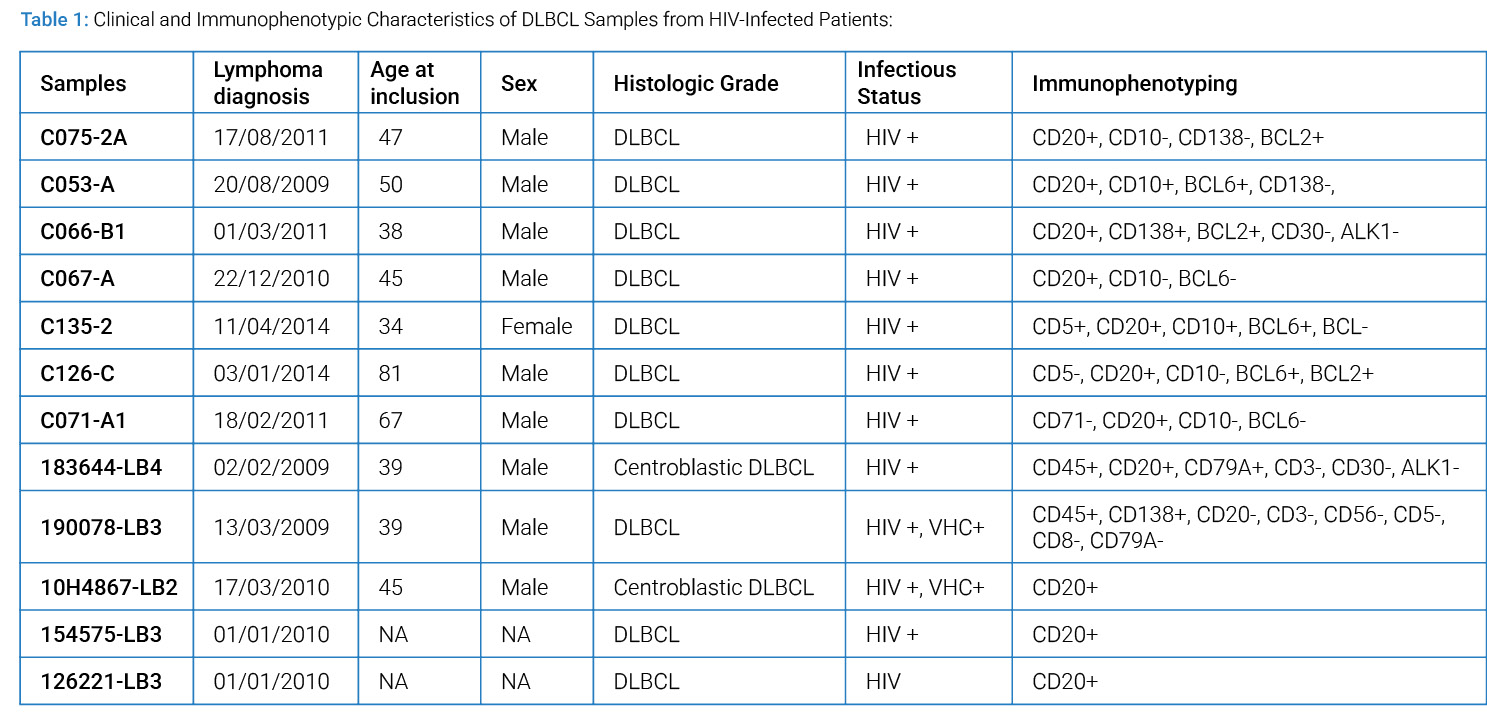
Biological Samples: The tumor library of the ANRS (Agence Nationale de la Recherche sur le Sida et les hépatites virales) provided us with seven paraffin-embedded samples as well as clinical and biological data (ANRS CO16 Lympho-VIR cohort). Five other samples were provided by H Lepidi (CHU de la Timone, Marseille). All samples were collected following ethical guidelines, and with informed consent from the patients, who also allowed the publication of their data. We used two technical replicates per biological sample to ensure the reliability of our findings. The clinical characteristics of the patient samples are summarized in (Table 1).
RNA Extraction, Quantification, and Quality Control: RNA was extracted using the RNeasy FFPE kit from Qiagen. The process began with deparaffinization, achieved by immersing the samples in xylene to remove paraffin, followed by ethanol washes to rehydrate the tissue. After rehydration, the tissue underwent lysis with proteinase K at 56°C for 15 minutes, followed by a heat-induced crosslink reversal step at 80°C for 15 minutes. This step ensures the recovery of high-quality RNA suitable for downstream analysis. RNA was then purified using on-column DNase treatment to eliminate any contaminating DNA, followed by several washing steps to remove impurities. RNA was eluted in RNase-free water and quantified using an Agilent NanoDrop spectrophotometer. The integrity of RNA was assessed using the Agilent Bioanalyzer, with samples exhibiting an RNA integrity number (RIN) ≥3 being considered of sufficient quality for transcriptomic analysis. Samples with suboptimal RIN scores were excluded from further processing.
Transcriptomic Study: For transcriptomic analysis, Agilent’s Sure Print G3 Human GE 8x60K v2 chip was used. The chip provides high gene and transcript coverage with high sensitivity. The chip has eight arrays, each with 62,976 probes. Sample preparation, labeling, and hybridization were performed according to the Agilent Gene Expression FFPE Workflow protocol, optimized for Formalin-Fixed, Paraffin-Embedded (FFPE) samples to ensure accurate and reproducible data. The Gene Expression FFPE Workflow protocol by Agilent is a specialized kit designed to address the unique challenges associated with formalin-fixed, paraffin-embedded samples. FFPE tissues, widely used in clinical and archival research, often contain degraded and fragmented RNA due to the harsh fixation and embedding processes. This protocol is specifically optimized to handle such degraded RNA, ensuring that meaningful transcriptomic data can still be obtained. By addressing the inherent challenges of FFPE samples, this workflow allows for leveraging valuable archival specimens for robust and reliable transcriptomic studies. The FFPE workflow begins with an RNA input repair step to address RNA fragmentation caused by the fixation process. RNA is reverse-transcribed into complementary DNA (cDNA) using a T7-oligo (dT) primer. This cDNA is amplified by in vitro transcription with T7 RNA polymerase, generating amplified complementary RNA (aRNA). The aRNA is then fluorescently labeled with Cy3 dye, purified to remove unincorporated dye, and quantified to ensure labeling efficiency. Hybridization of labeled aRNA to the microarray is performed under stringent conditions at 65°C for 17 hours to ensure specific binding of probes to their target sequences. Arrays are washed to remove non-specifically bound material, scanned using the Agilent SureScan Microarray Scanner, and fluorescence intensities are extracted using Agilent Feature Extraction software. The raw transcriptomic data generated and analyzed in this study have been deposited in the BioStudies database, under the Array Express collection. The dataset is publicly accessible under the accession number E-MTAB-15172.
Statistical Analysis: The AgiND library, implemented in the R software environment, was utilized for data analysis and visualization. AgiND, based on the Bioconductor framework, provides robust diagnostic tools for assessing microarray data quality and normalization. To ensure consistency across samples, quantile normalization was employed, homogenizing intensity distributions to minimize technical variations. The AgiND library used in this study was version 1.12.0, compatible with R version 4.2.2. Two filters were applied to preprocess the raw data: (1) control probes were removed to eliminate noise introduced by non-informative probes, and (2) genes expressed below the background level in 100% of samples were excluded to focus on biologically relevant signals. The background level was defined based on negative control probes included in the microarray platform.
For clustering, unsupervised hierarchical clustering was performed on normalized, median-adjusted gene expression data, grouping both genes and samples based on their expression profiles. The clustering analysis was carried out using the TMeV (Tigr Multi Experiment Viewer) software, version 4.9.0, which is part of the TM4 Microarray Software Suite (http://www.tm4.org/mev/). Unsupervised classification relies on gene expression data, enabling the separation of patient samples into distinct groups with shared transcriptomic signatures. Pearson correlation was chosen as the similarity metric, and clustering was conducted using the average linkage method to compute inter-cluster distances. Adjustments in TMeV included applying the “Median Center Gene/Row” method for data centering and setting the color scale limits between -2 and 2 for visualization.
Subsequently, Significance Analysis of Microarrays (SAM) was performed within TMeV to identify differentially expressed genes between groups defined by unsupervised clustering. The SAM analysis was configured to run with 10,000 permutations, a False Discovery Rate (FDR) of 1%, and a minimum fold-change threshold of 2, ensuring high confidence in the results. Additionally, visualization of heat maps and dendrograms was done directly within TMeV, applying the “Median Center Gene/Row” method for data centering and setting the color scale limits between -2 and 2 for visualization.
Gene enrichment analysis: Gene enrichment analysis was performed using g:Profiler (https://biit.cs.ut.ee/gprofiler/gost, g:Profiler version e111_eg58_p18_f463989d, database updated on 25/01/2024). This tool was used to identify enriched biological pathways, molecular functions, and cellular components associated with the differentially expressed genes from the microarray analysis. The gene set for the analysis was derived from the filtered microarray data, where genes with a False Discovery Rate (FDR) of 1% and a fold-change of 2 were considered differentially expressed. The analysis was conducted using default settings, and the Ensembl genome database (version 104) was chosen as the reference background to map the genes and account for any gene name inconsistencies. To correct for multiple testing, g:Profiler’s g:SCS (generalized Smith-Waterman-Cost-sensitive) algorithm was used to adjust for multiple comparisons, reducing the likelihood of false positives. This adjustment ensures that the reported pathways, molecular functions, and cellular components are significantly enriched. The enrichment analysis specifically focused on Gene Ontology (GO) terms, which were categorized into biological processes, molecular functions, and cellular components. The adjusted p-value threshold for significance was set at 0.05, ensuring that only highly reliable and biologically meaningful pathways were considered. Additionally, the Benjamini-Hochberg correction was applied for controlling the False Discovery Rate (FDR), ensuring the robustness of the results in the context of multiple hypothesis testing.
Results
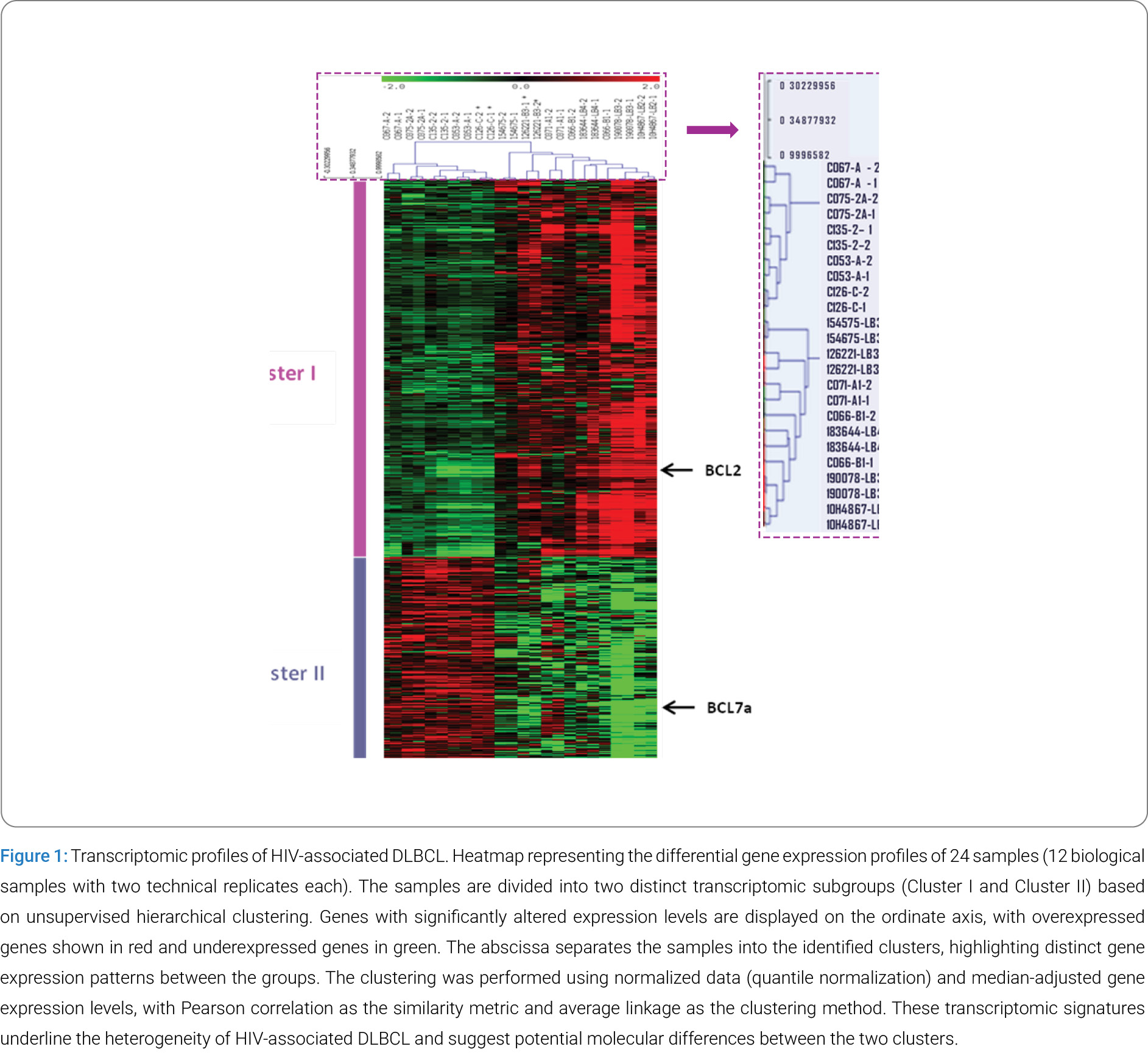
After hierarchical clustering of the normalized data of the 24 samples (2 replicates per sample), two groups were highlighted according to their gene expression profile. Based on this, a SAM analysis was performed on the normalized data using Pearson correlation and 10,000 permutations, with the False Discovery Rate (FDR) set to 1% and a fold change of 2. The two groups identified by the initial unsupervised hierarchical clustering were confirmed, characterized by the differential expression of 4045 genes (Figure 1). These two clearly defined subgroups did not correspond to the GC vs non-GC transcriptomic subgroups, except for the expression of the BCL2 and BCL7A genes. Among the most significant differences, the BCL2 gene was overexpressed in patient group II; specifically, BCL2 exhibited a 2.61 log₂ fold change when comparing group II to group I, corresponding to a fold change of approximately +6.07. While BCL7A was overexpressed in patients’ group I, specifically, BCL7A exhibited a 2.69 log₂ fold change when comparing group I to group II, corresponding to a fold change of approximately +6.69.
In contrast with the transcriptomic classification of non-HIV-related DLBCL, we failed to identify differential functional annotations specific to one subgroup. We were not able to define differential prognosis between the two groups due to the small number of samples analyzed. Functional annotation has enabled us to identify very general signaling pathways that are not directly related to pathology. The several signaling pathways identified are summarized in (Table 2) and (Table 3). Our findings indicate that HIV-related DLBCLs exhibit a distinct transcriptomic profile compared to HIV-negative DLBCLs. This distinct profile could be mainly attributed to the different microenvironment, cytokine profiles, and immune responses in these different lymphoma populations. The overexpression of BCL2 and BCL7A aligns with the notion that these genes play a critical role in the pathogenesis of HIV-related lymphomas. The lack of clear GC vs ABC subtype differentiation suggests that the underlying biology of HIV-associated DLBCL may involve unique pathogenic mechanisms not present in immunocompetent individuals.
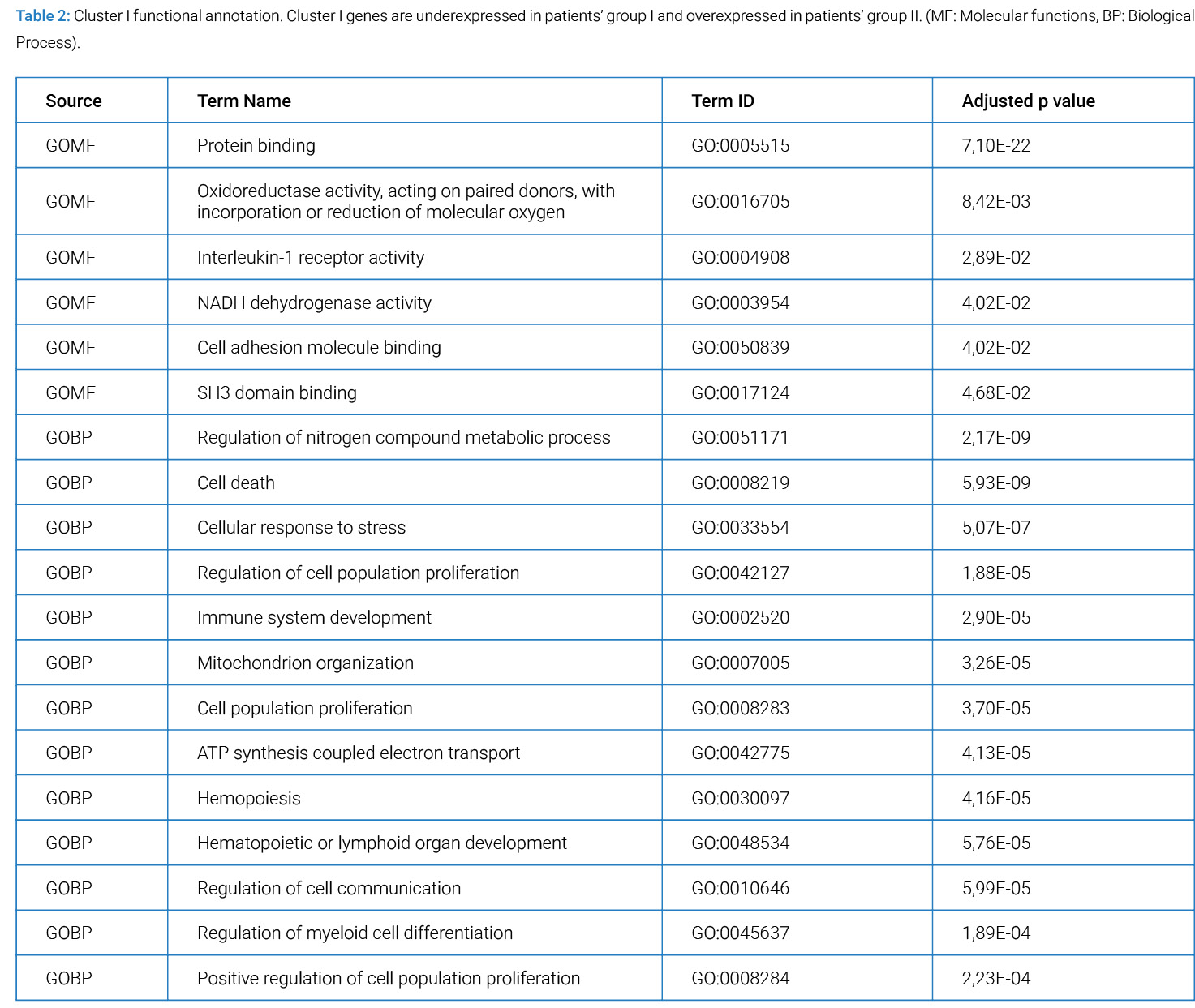
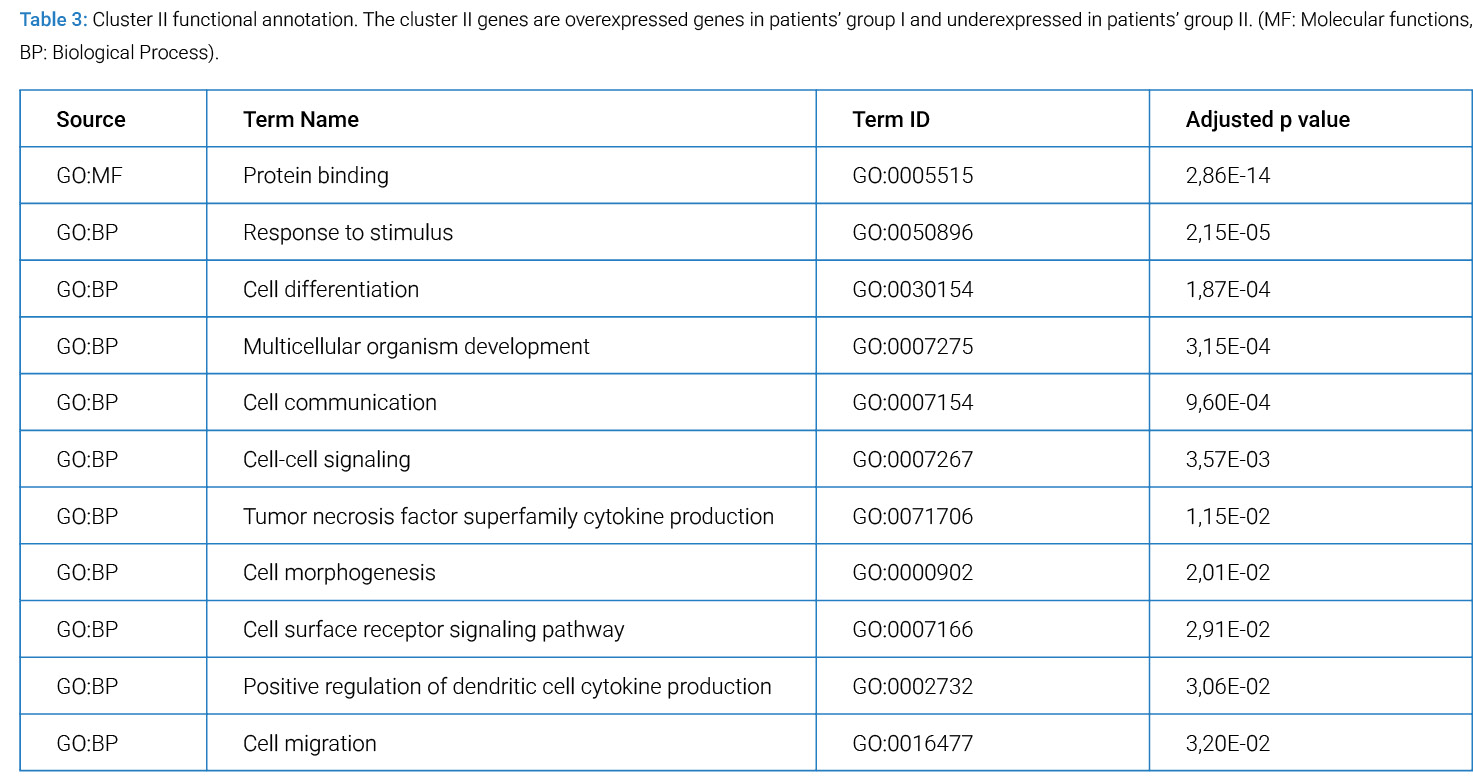
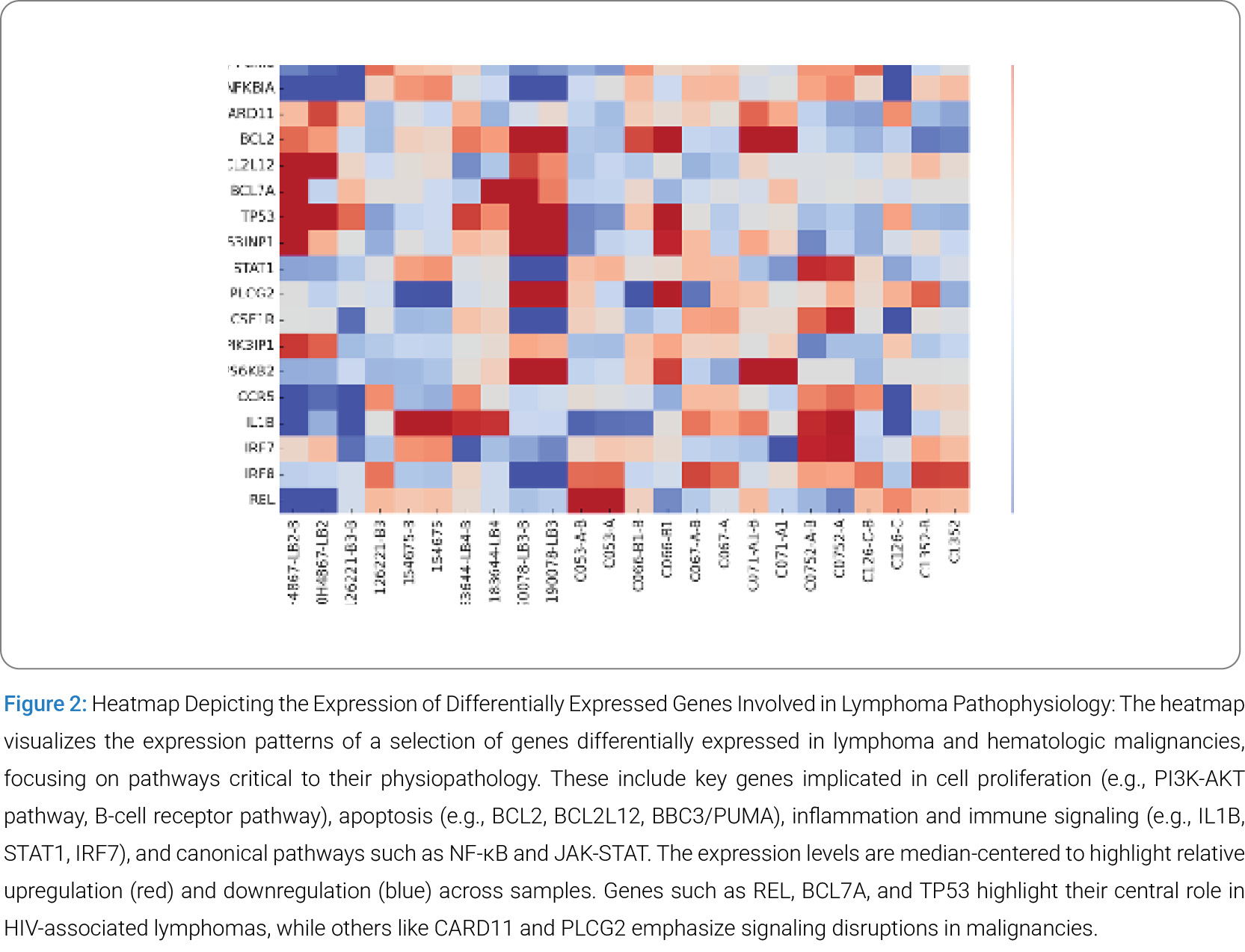
For example, the signaling pathway “immune system development“ (adjusted p-value = 2.90E−05) identified in the cluster I functional annotation is underexpressed in patients’ group I and over-represented in patients’ group II. This pathway includes significant genes such as STAT1, BATF, IRF7, HLA-E, and IL4R, which are thus differentially expressed between the patients’ groups. STAT1 is a key transcription factor involved in interferon signaling pathways, crucial for antiviral responses and tumor surveillance. Dysregulation of STAT1 has been associated with immune evasion mechanisms in various lymphomas, including DLBCL [27]. Other pivotal genes of the immune responses have also been identified. BATF is an important transcription factor that drives the differentiation of T cells and B cells. It is essential for the development of follicular helper T cells, which support antibody responses. BATF mutations or dysregulation can affect immune cell function and are implicated in lymphomagenesis [28]. IRF7 is a transcription factor that regulates the production of type I interferons, critical for antiviral immunity and immune surveillance against tumors. It has been linked to immune evasion in lymphomas due to its role in regulating innate immunity [29]. HLA-E is involved in immune recognition and modulation, particularly through interactions with NK cells. Overexpression of HLA-E contributes to immune escape in lymphomas by inhibiting NK cell-mediated cytotoxicity [30]. IRF8 is another transcription factor implicated in the differentiation of myeloid cells and B cells. Its dysregulation has been associated with certain subtypes of lymphomas, particularly those affecting B-cell maturation [31]. IL4R encodes the receptor for interleukin-4, a cytokine that promotes B cell proliferation and survival. Aberrant signaling through IL4R has been linked to the development of B-cell lymphomas [32]. A selection of genes that are differentially expressed in Patient Groups I and II is summarized in (Figure 2).
Discussion
DLBCL represent a heterogeneous group of aggressive lymphoid malignancies characterized by diverse genetic alterations and distinct clinical behaviors. Among the differentially expressed genes, we identified TP53, BCL2, and BCL7A. These pivotal genes implicated in the pathogenesis of DLBCL stand out for their significant roles in tumor development and progression.
The TP53 gene is overexpressed in patients’ group I. This gene is a crucial tumor suppressor gene known for its role in maintaining genomic stability by regulating the cell cycle and initiating apoptosis in response to DNA damage [33]. Mutations in TP53 are frequently observed in DLBCL, leading to a loss of function that allows neoplastic cells to escape apoptosis. This dysfunction contributes not only to the survival of genetically unstable cells but also to the accumulation of further genetic aberrations, which can drive tumorigenesis. The correlation between TP53 mutations and poor prognosis in DLBCL emphasizes the need for targeted therapies aimed at restoring p53 function or mimicking its pro-apoptotic effects [34].
The BCL2 gene, a master regulator of apoptosis, is often found to be overexpressed in DLBCL and is more particularly overexpressed in patients’ group II. The dysregulation of BCL2 expression enables cancer cells to evade programmed cell death, a hallmark of many malignancies. The overexpression of BCL2 can occur through various mechanisms, including chromosomal translocations, such as t(14;18), which juxtaposes the BCL2 gene to the immunoglobulin locus. This aberrant expression is associated with a poor prognosis in DLBCL patients, as it contributes to the aggressive nature of the disease. Therapeutic strategies targeting BCL2, such as BH3 mimetics, have shown promise in preclinical and clinical settings, suggesting that modulation of apoptosis pathways could be a viable approach for treating DLBCL despite various escape mechanisms [35]. Previous studies have demonstrated the pivotal role of the immune microenvironment in influencing lymphoma behavior [36]. The presence of HIV alters the lymph node microenvironment significantly, leading to chronic B-cell activation and an increased risk of lymphomagenesis [37]. The high degree of gene expression dysregulation observed in our study is consistent with the known impact of HIV on B-cell proliferation and oncogene activation [38].
The BCL7A gene is overexpressed in group I. This gene was initially identified as part of the t(8;14) translocation in Burkitt lymphomas and plays a significant role in the pathogenesis of DLBCL. Its product is involved in chromatin remodeling, influencing transcription regulation, which is critical for maintaining normal B-cell function. Mutations or dysregulation of BCL7A have been associated with alterations in the B-cell Receptor (BCR) signaling pathway, a key driver in the oncogenesis of DLBCL [39]. In the context of HIV-associated DLBCL, BCL7A may have a more prominent role. HIV infection leads to chronic immune activation and an increased likelihood of genetic instability in B-cells. This environment may promote mutations in BCL7A, exacerbating its oncogenic potential. HIV-positive patients with DLBCL often present with more aggressive disease, and the dysregulation of genes involved in chromatin remodeling, such as BCL7A, could contribute to this phenotype [40]. Studies have shown that BCL7A mutations are more frequent in HIV-positive DLBCL compared to non-HIV-associated cases, suggesting that this gene may act as a crucial link between the immunodeficiency state and lymphomagenesis.
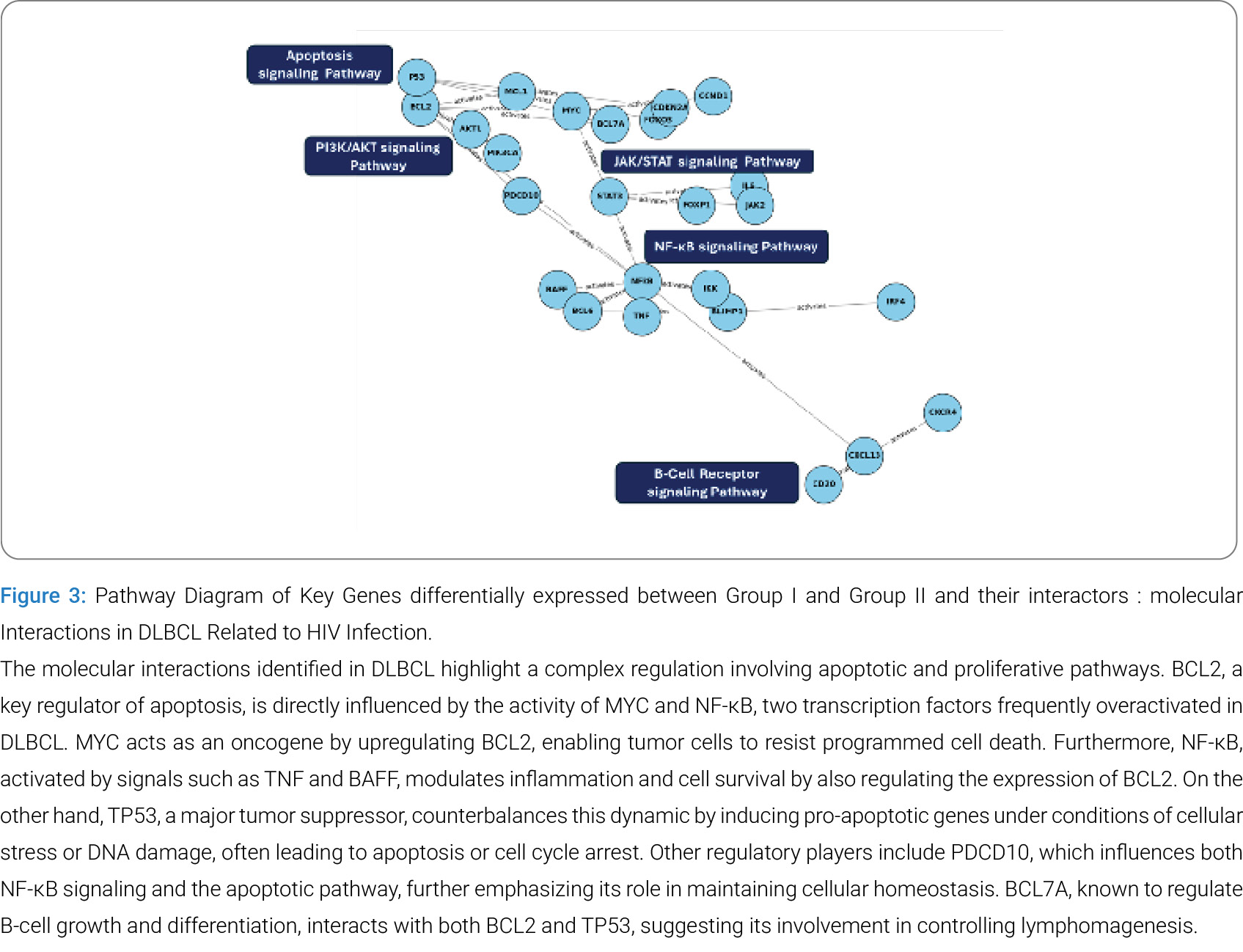
The complex network of molecular interactions in DLBCL related to HIV infection is illustrated in (Figure 3). Key differentially expressed genes, including BCL2, MYC, NF-κB, and TP53, are central to apoptotic and proliferative pathways, influenced by upstream regulators such as TNF, BAFF, and PDCD10. Pathways like JAK/STAT and PI3K/AKT further drive survival and immune evasion. The interactions involving BCL7A underscore its potential role in lymphomagenesis. Together, the diagram highlights critical targets for understanding and treating DLBCL.
The selected genes differentially expressed between Patient Group I and II (Figure 2) are central to key molecular pathways involved in the physiopathology of DLBCL, including cell proliferation pathways such as the PI3K-AKT pathway and B-cell receptor signaling pathway, as well as apoptosis regulators like BCL, BCL2L12, and BBC3/PUMA. Additionally, it highlights genes implicated in immune and inflammatory responses, such as IL1B, STAT1, and IRF7, and canonical signaling pathways including NF-κB and JAK-STAT. Notable genes such as REL, BCL7A, and TP53 underscore their role in the pathogenesis of HIV-associated lymphomas, while CARD11 and PLCG2 reflect disruptions in lymphocyte signaling pathways. The heatmap provides a comprehensive view of the molecular heterogeneity in lymphoma and highlights potential biomarkers and therapeutic targets, contributing to a deeper understanding of the molecular landscape of HIV-associated lymphomas and other related malignancies.
Previous studies have highlighted the importance of immune developmental signaling pathways in lymphoma pathogenesis. In particular, reduced expression of interferon response genes and downstream regulators such as STAT1 and IRF7 has been associated with impaired antitumor immunity and poor prognosis in DLBCL [27]. Furthermore, IRF8 dysregulation has been implicated in altered B-cell differentiation and contributes to immune escape in lymphoma [31]. In the context of HIV infection, where chronic immune activation coexists with immunosuppression, such perturbations in immune signaling are likely exacerbated. As described by Mu et al., chronic inflammation in HIV leads to metabolic reprogramming and T cell dysfunction, potentially reshaping lymphomagenesis through altered cytokine signaling [37]. The differential activation of the “immune system development” pathway observed in our two patient groups may therefore reflect distinct levels of immune reconstitution or exhaustion in the tumor microenvironment, which could influence both tumor behavior and therapeutic responses. These immune-related transcriptomic patterns merit further investigation in larger cohorts, particularly to evaluate their prognostic and predictive value in HIV-associated DLBCL. Recent studies have increasingly emphasized the importance of genomic subtyping and the tumor microenvironment in understanding the heterogeneity and behavior of DLBCL. For instance, Yan et al. proposed a refined classification of DLBCL based on integrated genomic features, including mutations and copy number alterations, which correlate with distinct microenvironmental patterns and clinical outcomes. Similarly, De Jong et al. highlighted the role of the tumor microenvironment, particularly immune cell infiltration and stromal signatures, as key modulators of disease progression and treatment response. These findings support our own observations of distinct transcriptomic profiles in HIV-related DLBCL subtypes, suggesting that both intrinsic genetic factors and extrinsic microenvironmental interactions contribute to the unique biology of these lymphomas.
While our findings offer valuable insights into the transcriptomic landscape of HIV-related DLBCL, they are subject to several significant limitations. Foremost is the small sample size of 12 biological specimens, which inherently restricts the generalizability and robustness of our conclusions. This limited cohort size also precludes the ability to perform meaningful prognostic analyses or validate the existence of additional molecular subtypes. Furthermore, the technical variability introduced by using paraffin-embedded samples could have influenced RNA integrity and the resulting gene expression data. While we employed specialized RNA extraction and quality control protocols, FFPE samples are known to yield fragmented RNA, which may introduce biases in transcriptomic analysis.
An independent replication cohort of 10 additional patients was tested in an attempt to validate our findings; however, no conclusive results were obtained due to issues with RNA quality and sample labeling. The RNA extracted from these samples exhibited poor quality, which significantly impacted the integrity of the transcriptomic data. Additionally, there were challenges in accurately labeling the samples for transcriptomic analysis, which further hindered the ability to achieve reliable results. These technical difficulties underscore the need for improved sample preparation, RNA extraction protocols, and labeling strategies, particularly when working with FFPE samples. The failure to validate our results in a second cohort emphasizes the importance of ensuring high-quality RNA and consistent methodologies for future replication studies. Future efforts to replicate these findings should address these issues and incorporate more rigorous quality control measures to ensure the reliability and robustness of the results.
Our findings support previous studies suggesting that HIV- associated DLBCL harbors a distinct molecular profile shaped by chronic immune activation and tumor-promoting genetic alterations. The overexpression of BCL2 and BCL7A observed in our cohort aligns with their established roles in apoptosis resistance and immune evasion. In parallel, the lack of clear GC vs. ABC subtype segregation reinforces the hypothesis that HIV-associated DLBCL follows divergent pathogenic mechanisms compared to immunocompetent cases.
These molecular features offer therapeutic opportunities. BCL2 inhibitors or BH3 mimetics, for instance, may prove particularly effective in HIV-positive patients with overexpression of anti-apoptotic genes. Moreover, the differential expression of immune-related genes such as STAT1 and BATF points to the potential of immunomodulatory therapies aimed at restoring anti-tumor immunity. Importantly, our results are consistent with recent efforts to stratify aggressive lymphomas based on gene expression classifiers. Ferreri et al. demonstrated that transcriptomic signatures can effectively distinguish clinically relevant DLBCL subtypes and inform treatment strategies. While their work focused on immunocompetent individuals, our study extends this approach to patients with HIV-induced immune dysregulation, where the interplay between viral infection, host immunity, and tumor biology creates a unique molecular environment. The distinct expression patterns of TP53, BCL2, and BCL7A in HIV-associated DLBCL support the applicability of such classifiers in this setting and highlight the value of integrating transcriptomic profiling into personalized therapeutic decision-making for these patients.
Finally, future research should focus on addressing the limitations identified in this study, particularly the small sample size and issues with sample quality. Larger, multicenter cohorts are essential to validate the transcriptomic signatures observed in HIV-related DLBCL and to explore whether these findings hold true across different geographic regions and patient populations. Moreover, the patient selection process in this study may have introduced potential biases that could affect the generalizability of the results. For example, the cohort may have been influenced by factors such as geographical location, treatment history, or comorbidities, which could skew the findings toward a specific population and limit their applicability to the broader HIV-DLBCL patient population. These biases must be carefully considered in future studies to ensure more representative immune sample selection. Additionally, multiomics approaches, such as combining transcriptomics, proteomics, and metabolomics, would provide a more comprehensive understanding of the molecular mechanisms driving HIV-related DLBCL. These approaches could uncover novel biomarkers and therapeutic targets, leading to more personalized treatment strategies. The integration of clinical data, including treatment regimens, patient outcomes, and survival data, will be crucial to assess the clinical relevance of the identified molecular signatures and their potential prognostic value. The identified molecular subtypes could have profound clinical implications, particularly in improving the personalization of treatment strategies for patients. By categorizing patients into distinct subgroups based on their molecular profiles, clinicians can potentially tailor therapies to target specific pathways or vulnerabilities unique to each subtype. This precision medicine approach not only holds promise for enhancing therapeutic efficacy but also for reducing the toxicity associated with more generalized treatment regimens. The integration of clinical data, including treatment regimens, patient outcomes, and survival data, will be crucial to assess the clinical relevance of the identified molecular signatures and their potential prognostic value. This step will help validate the subtypes as actionable biomarkers, bridging the gap between molecular insights and real-world clinical applications. Ultimately, this approach could drive the development of subtype-specific clinical trials, fostering innovation in cancer care and potentially improving patient outcomes. To strengthen the reliability of our findings on the molecular landscape of HIV-associated DLBCL, it is essential to consider validating the key results using an independent cohort or alternative methodologies. This step is crucial for confirming the reproducibility of the observed gene expression profiles and their relevance in diverse patient populations. An independent cohort would provide the opportunity to test whether the identified molecular signatures, including the differential expression of TP53, BCL2, and BCL7A, are consistent across varied clinical and demographic settings. Such validation ensures that the conclusions drawn from our study are not limited by the characteristics of the original cohort, such as its geographical or treatment-specific biases. In addition to cohort validation, employing alternative methods like Quantitative PCR (qPCR) for a subset of pivotal genes can further enhance the robustness of the data. qPCR is highly sensitive and specific, making it an ideal approach for verifying the expression levels of genes implicated in DLBCL pathogenesis. For instance, qPCR could be used to confirm the overexpression of TP53 in group I patients or BCL2 in group II, reinforcing the roles of these genes in tumor development and progression. These validation strategies are not only critical for confirming the biological significance of our findings but also for ensuring their translational potential. By rigorously validating the results, we pave the way for these molecular insights to inform the development of new diagnostic tools and targeted therapies, ultimately improving patient outcomes in HIV-associated DLBCL. Indeed, we had limited access to biological material, which constrained certain validation steps. While we had sufficient RNA to perform the transcriptomic study, the quantity was not enough to conduct qPCR validation. To address this limitation, an independent cohort was recruited to carry out a separate transcriptomic study and validate the findings. Extensive efforts were made to extract and process RNA from these new samples; however, the quality of the material posed significant challenges. The RNA extracted from the independent cohort samples was of very poor quality, exhibiting extensive degradation, which rendered the data unreliable. As a result, the samples failed to meet the necessary quality control thresholds for both transcriptomic analysis and subsequent validation experiments. This underscores the critical need for improved sample collection, storage, and processing protocols to ensure the reliability and reproducibility of future studies.
Future research should build upon the findings of this study by adopting a multi-dimensional approach to further unravel the complexity of HIV-associated DLBCL. Integrating proteomics with transcriptomic data could provide a deeper understanding of how gene expression translates into functional protein networks and reveal post-translational modifications critical to lymphoma pathogenesis. Proteomics could also help identify potential therapeutic targets by highlighting key proteins driving tumor growth, immune evasion, or resistance to therapy. Functional studies should be prioritized to validate the roles of key differentially expressed genes such as BCL2, BCL7A, and TP53, which were highlighted in this study. Advanced experimental approaches, including CRISPR-Cas9 gene editing and siRNA knockdowns, could directly assess the functional impact of these genes on lymphoma cell survival, proliferation, and apoptosis. Overexpression studies could further elucidate their oncogenic potential or contribution to disease progression. Such experiments would not only confirm the biological significance of these genes but also provide insights into their potential as therapeutic targets. Additionally, in vivo models, such as Patient-Derived Xenografts (PDX), represent a critical next step for studying the biological impact of key genes on tumor growth and therapeutic responses. PDX models can mimic the heterogeneity and microenvironment of human DLBCL, offering a valuable platform to test novel treatments and validate findings in a clinically relevant context. To overcome the technical limitations encountered in this study, adopting advanced sequencing technologies such as RNA-Seq could greatly enhance the resolution of transcriptomic analyses. RNA-Seq would allow the detection of novel transcripts, isoform diversity, and rare mutations, which may play pivotal roles in the pathophysiology of HIV-associated DLBCL. Combining transcriptomics, proteomics, and functional studies could yield a comprehensive understanding of the molecular mechanisms driving this aggressive lymphoma and pave the way for the development of more effective, personalized therapies.
Conclusions
Preliminary results from our study suggest that HIV-related DLBCLs exhibit a distinct transcriptomic profile compared to HIV-negative lymphomas, influenced by immune contexture and cytokine dynamics in HIV-positive individuals. These findings contribute novel insights into the pathobiology of HIV-associated DLBCL and support the rationale for personalized therapeutic strategies. While further validation is needed, especially in larger and more diverse cohorts, the observed gene expression patterns form a foundation for future investigations.
The integration of clinical, molecular, and immunological data will be key to defining prognostic subgroups and optimizing therapeutic approaches. Multiomics analysis may deepen understanding of tumor biology, leading to the identification of new biomarkers and actionable targets. Ultimately, these findings may shape future treatment paradigms, promoting precision medicine for improved outcomes in this vulnerable patient population.
Acknowledgments
The authors would like to sincerely thank the patients who provided informed consent for the use of their samples in this research. We also extend our gratitude to INSERM, Aix-Marseille Université, and Advanced BioDesign (Lyon) for their financial support.Special thanks to the France Génomique National infrastructure for providing access to the IBiSA Transcriptomics and Genomics Marseille–Luminy (TGML) platform. We acknowledge Pr. Nicolas Mounier for supplying the samples for testing, and Christophe Avignon for his valuable assistance in the preparation of the paraffin sections.
Declaration
This work was approved by the local Ethical Committee of the Hematology & Cellular Therapy Department (CHU Conception). All samples were collected following ethical guidelines and with informed consent from the patients who also allowed the publication of their data.
This work was supported by grants from the ANRS (Agence Nationale de la Recherche sur le Sida et les hépatites virales), Aix-Marseille Université, and Advanced BioDesign, with the TGML platform receiving support from France Génomique. This work does not involve competing interests.
Conflict of Interest
The authors declare no potential conflicts of interest with respect to the research, authorship, and/or publication of this article. Informed consent was obtained for this publication.
References
- International Non-Hodgkin’s Lymphoma Prognostic Factors Project. A predictive model for aggressive non-Hodgkin’s lymphoma. N Engl J Med. 1993;329(14):987–994.
- Alizadeh AA, Eisen MB, Davis RE, Ma C, Lossos IS, Rosenwald A, et al. Distinct types of diffuse large B-cell lymphoma identified by gene expression profiling. Nature. 2000;403(6769):503–511.
- Karmali R, Gordon LI. Molecular subtyping in diffuse large B cell lymphoma: closer to an approach of precision therapy. Curr Treat Options Oncol. 2017;18(2):11.
- Hans CP, Weisenburger DD, Greiner TC, Gascoyne RD, Delabie J, Ott G, et al. Confirmation of the molecular classification of diffuse large B-cell lymphoma by immunohistochemistry using a tissue microarray. Blood. 2004;103(1):275–282.
- Muris JJF, Meijer CJLM, Vos W, van Krieken JHJM, Jiwa NM, Ossenkoppele GJ, et al. Immunohistochemical profiling based on Bcl-2, CD10 and MUM1 expression improves risk stratification in patients with primary nodal diffuse large B cell lymphoma. J Pathol. 2006;208(5):714–723.
- Younes A, Sehn LH, Johnson P, Zinzani PL, Hong X, Zhu J, et al. Randomized phase III trial of ibrutinib and rituximab Plus cyclophosphamide, doxorubicin, vincristine, and prednisone in non-germinal center B-cell diffuse large B-cell lymphoma. J Clin Oncol. 2019;37(15):1285–1295.
- Wilson WH, Wright GW, Huang DW, Hodkinson B, Balasubramanian S, Fan Y, et al. Effect of ibrutinib with R-CHOP chemotherapy in genetic subtypes of DLBCL. Cancer Cell. 2021;39(12):1643–1653.e3.
- Rosenwald A, Staudt LM. Gene expression profiling of diffuse large B-cell lymphoma. Leuk Lymphoma. 2003;44 (Suppl 3):S41–S47.
- Thieblemont C, Briere J, Mounier N, Voelker HU, Cuccuini W, Hirchaud E, et al. The germinal center/activated B-cell subclassification has a prognostic impact for response to salvage therapy in relapsed/refractory diffuse large B-cell lymphoma: a bio-CORAL study. J Clin Oncol. 2011;29(31):4079–4087.
- Rutherford SC, Leonard JP. DLBCL cell of origin: what role should it play in care today? Oncology (Williston Park). 2018;32(9):445–449.
- Boltezar L, Prevodnik VK, Perme MP, Gasljevic G, Novakovic BJ. Comparison of the algorithms classifying the ABC and GCB subtypes in diffuse large B-cell lymphoma. Oncol Lett. 2018;15(5):6903–6912.
- Alaggio R, Amador C, Anagnostopoulos I, Attygalle AD, Araujo IBO, Berti E, et al. The 5th edition of the World Health Organization classification of haematolymphoid tumours: lymphoid neoplasms. Leukemia. 2022;36(7):1720–1748.
- Alaggio R, Amador C, Anagnostopoulos I, Attygalle AD, de Oliveira Araujo IB, Berti E, et al. Correction: “The 5th edition of the World Health Organization classification of haematolymphoid tumours: lymphoid neoplasms,” leukemia. 2022 Jul;36(7):1720–1748. Leukemia. 2023;37(9):1944-1951.
- Carbone A, Chadburn A, Gloghini A, Vaccher E, Bower M. Immune deficiency/dysregulation -associated lymphoproliferative disorders. Revised classification and management. Blood Rev. 2024;64:101167.
- Lurain K, Ramaswami R, Yarchoan R. The role of viruses in HIV-associated lymphomas. Semin Hematol. 2022;59(4):183–191.
- Dolcetti R, Gloghini A, Caruso A, Carbone A. A lymphomagenic role for HIV beyond immune suppression? Blood. 2016;127(11):1403–1409.
- Vaccher E, Gloghini A, Carbone A. HIV-related lymphomas. Curr Opin Oncol. 2022;34(5):439–445.
- Thapa DR, Li X, Jamieson BD, Martinez-Maza O. Overexpression of microRNAs from the miR-17-92 paralog clusters in AIDS-related non-Hodgkin’s lymphomas. PLoS One. 2011;6(6):e20781.
- Torne AS, Robertson ES. Epigenetic mechanisms in latent Epstein-Barr virus infection and associated cancers. Cancers (Basel). 2024;16(5):991.
- Ramos JC, Sin SH, Staudt MR, Roy D, Vahrson W, Dezube BJ, et al. Nuclear factor kappa B pathway associated biomarkers in AIDS defining malignancies. Int J Cancer. 2012;130(11):2728–2733.
- Capello D, Scandurra M, Poretti G, Rancoita PMV, Mian M, Gloghini A, et al. Genome wide DNA-profiling of HIV-related B-cell lymphomas. Br J Haematol. 2010;148(2):245–255.
- Rinaldi A, Mian M, Chigrinova E, Arcaini L, Bhagat G, Novak U, et al. Genome-wide DNA profiling of marginal zone lymphomas identifies subtype-specific lesions with an impact on the clinical outcome. Blood. 2011;117(5):1595–604.
- Chapman JR, Bouska AC, Zhang W, Alderuccio JP, Lossos IS, Rimsza LM, et al. EBV-positive HIV-associated diffuse large B cell lymphomas are characterized by JAK/STAT (STAT3) pathway mutations and unique clinicopathologic features. Br J Haematol. 2021;194(5):870–878.
- Scott DW, Wright GW, Williams PM, Lih CJ, Walsh W, Jaffe ES, et al. Determining cell-of-origin subtypes of diffuse large B-cell lymphoma using gene expression in formalin-fixed paraffin-embedded tissue. Blood. 2014;123(8):1214–1217.
- Madan R, Gormley R, Dulau A, Xu D, Walsh D, Ramesh KH, et al. AIDS and non-AIDS diffuse large B-cell lymphomas express different antigen profiles. Mod Pathol. 2006;19(3):438-446.
- Patrone L, Henson SE, Teodorovic J, Malone CS, French SW, Wall R, et al. Gene expression patterns in AIDS versus non-AIDS-related diffuse large B-cell lymphoma. Exp Mol Pathol. 2003;74(2):129–139.
- Wang W, Lopez McDonald MC, Kim C, Ma M, Pan ZT, Kaufmann C, et al. The complementary roles of STAT3 and STAT1 in cancer biology: insights into tumor pathogenesis and therapeutic strategies. Front Immunol. 2023;14:1265818.
- Trujillo-Ochoa JL, Kazemian M, Afzali B. The role of transcription factors in shaping regulatory T cell identity. Nat Rev Immunol. 2023;23(12):842–856.
- Ning S, Pagano JS, Barber GN. IRF7: activation, regulation, modification and function. Genes Immun. 2011;12(6):399–414.
- Liu X, Song J, Zhang H, Liu X, Zuo F, Zhao Y, et al. Immune checkpoint HLA-E:CD94-NKG2A mediates evasion of circulating tumor cells from NK cell surveillance. Cancer Cell. 2023;41(2):272–287.e9.
- Cai M, Chen N. The roles of IRF-8 in regulating IL-9-mediated immunologic mechanisms in the development of DLBCL: a state-of-the-art literature review. Front Oncol. 2022;12:817069.
- Natoli A, Lupertz R, Merz C, Muller WW, Kohler R, Krammer PH, et al. Targeting the IL-4/IL-13 signaling pathway sensitizes Hodgkin lymphoma cells to chemotherapeutic drugs. Int J Cancer. 2013;133(8):1945–1954.
- Olivier M, Hollstein M, Hainaut P. TP53 mutations in human cancers: origins, consequences, and clinical use. Cold Spring Harb Perspect Biol. 2010;2(1):a001008.
- Duffy MJ, O’Donovan N, Mc Dermott E, Crown J. Validated biomarkers: The key to precision treatment in patients with breast cancer. Breast. 2016;29:192–201.
- Adams CM, McBride A, Michener P, Shkundina I, Mitra R, An HH, et al. Identifying targetable vulnerabilities to circumvent or overcome venetoclax resistance in diffuse large B-cell lymphoma. Cancers (Basel). 2024;16(11):2130.
- Takahara T, Nakamura S, Tsuzuki T, Satou A. The immunology of DLBCL. Cancers (Basel). 2023;15(3):835.
- Mu W, Patankar V, Kitchen S, Zhen A. Examining chronic inflammation, immune metabolism, and T cell dysfunction in HIV infection. Viruses. 2024;16(2):219.
- Isaguliants M, Bayurova E, Avdoshina D, Kondrashova A, Chiodi F, Palefsky JM. Oncogenic Effects of HIV-1 Proteins, Mechanisms behind. Cancers (Basel). 2021;13(2):305.
- Ramos-Medina R, Montes-Moreno S, Maestre L, Canamero M, Rodriguez-Pinilla M, Martinez-Torrecuadrada J, et al. BCL7A protein expression in normal and malignant lymphoid tissues. Br J Haematol. 2013;160(1):106–109.
- Scott DW, Gascoyne RD. The tumour microenvironment in B cell lymphomas. Nat Rev Cancer. 2014;14(8):517–534.
Keywords
Lymphoma; Human immunodeficiency virus type 1; Transcriptome
Cite this article
Labiad Y, Baier C, Genin M, Besson C, Prevot S, Lepidi H, et al. Transcriptomic Study of Diffuse Large B-Cell Lymphoma Associated with HIV Infection: Identification of Novel Molecular Subtypes. Clin Oncol J. 2026;7(1):1–12.
Copyright
© 2026 Regis Costello. This is an open access article distributed under the terms of the Creative Commons Attribution 4.0 International License (CC BY-4.0).